Supervised vs. Unsupervised Machine Learning
The way we approach data analysis and decision-making has changed dramatically thanks to machine learning. There are two main models for machine learning: supervised learning and unsupervised learning. These two strategies have different functions and particular uses in diverse sectors. In this article, we will examine the major distinctions between supervised and unsupervised machine learning, as well as their guiding concepts, applications, and illustrative uses.
Author
READ
Category

An analogy to teaching a model to generate predictions based on labeled data is supervised machine learning. This situation allows the algorithm to understand the underlying patterns and connections by giving it a dataset of input attributes and associated output labels. Making precise predictions or classifying data into predetermined categories is the main objective of supervised learning.
Key Characteristics of Supervised Learning:
Labeled Data: The dataset used for training contains labeled examples, where each input is associated with a known output or class label.
Target Variable: Supervised learning aims to predict a target variable (output) based on one or more input features.
Training Phase: During training, the model adjusts its parameters to minimize the difference between its predictions and the true labels in the training data.
Examples: Common applications of supervised learning include image classification, spam email detection, and predicting housing prices.
Supervised Learning Algorithms:
Linear Regression: Used for predicting continuous numeric values.
Logistic Regression: Used for binary classification tasks.
Decision Trees and Random Forests: Suitable for both regression and classification problems.
Support Vector Machines (SVM): Effective for binary classification.
Neural Networks: Versatile for various tasks, including image and speech recognition.

On the other hand, unsupervised machine learning works with unlabeled data and uses an algorithm to find hidden patterns, structures, or correlations in the data without explicit direction. A useful tool for exploratory data analysis, the model recognizes similarities, differences, or clusters among data points in unsupervised learning.
Key Characteristics of Unsupervised Learning:
Unlabeled Data: The dataset used for training lacks explicit labels or target variables.
Clustering and Dimensionality Reduction: Unsupervised learning tasks often involve clustering similar data points or reducing the dimensionality of the data to reveal underlying structures.
Examples: Common applications of unsupervised learning include customer segmentation, anomaly detection, and topic modeling.
Unsupervised Learning Algorithms:
K-Means Clustering: Used to group data points into clusters based on their similarities.
Principal Component Analysis (PCA): Reduces the dimensionality of data while preserving important information.
Hierarchical Clustering: Builds a hierarchy of clusters within the data.
Gaussian Mixture Models (GMM): Models data points as a mixture of multiple Gaussian distributions.
Association Rule Mining: Discovers interesting relationships between variables in transactional data.
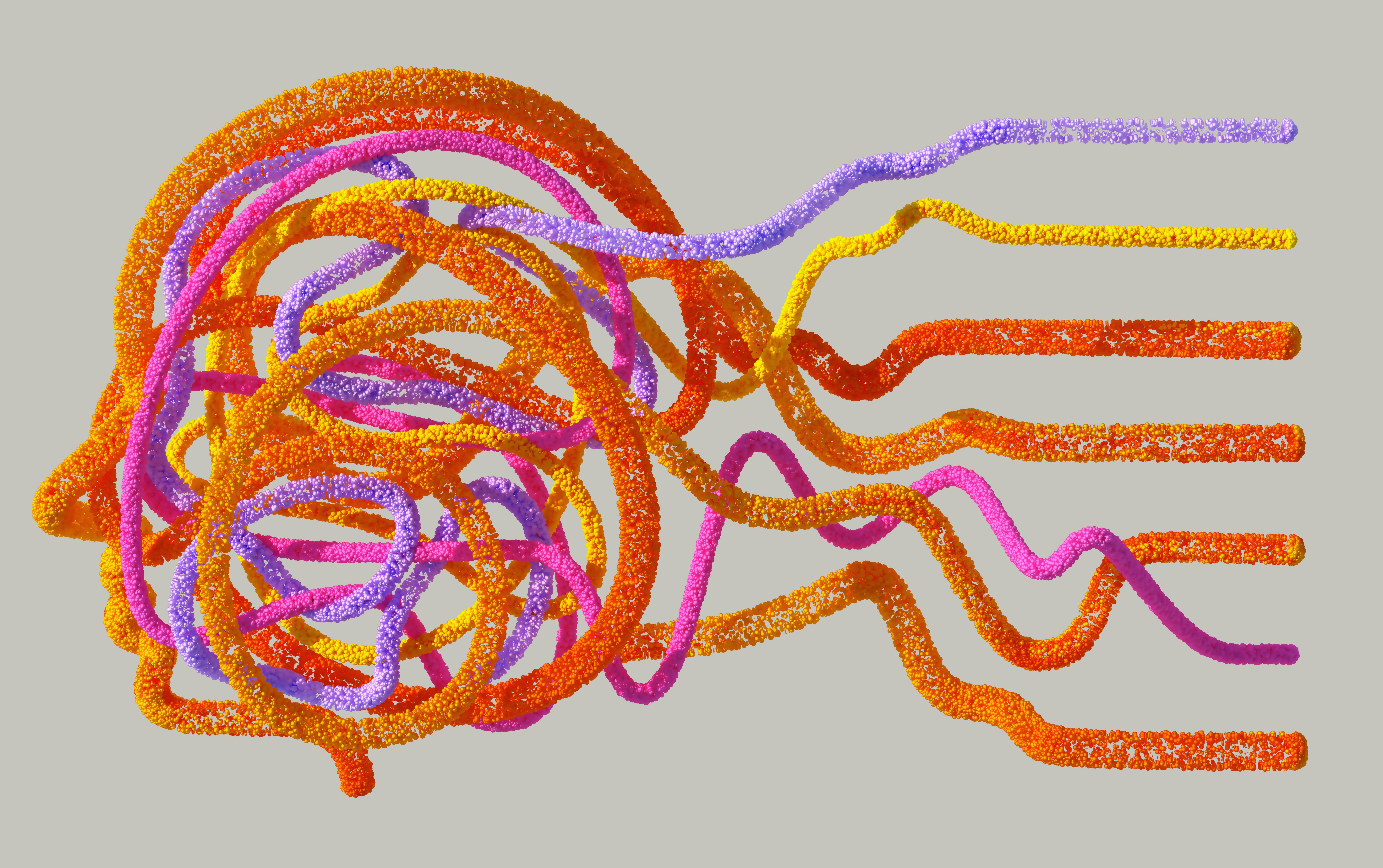
While unsupervised learning uses unlabeled data, supervised learning requires annotated data.
While unsupervised learning concentrates on finding underlying patterns or structures, supervised learning seeks to make predictions or categorize data.
Unsupervised learning is used for clustering, dimensionality reduction, and anomaly detection whereas supervised learning is utilized for tasks like regression and classification.
While the success of a model in supervised learning can be assessed using measures like accuracy or mean squared error, evaluating a model in unsupervised learning can be more subjective and frequently requires domain expertise.